
Corrective & Paramedical
Paramedical Camouflage
Pigment matched to your skin to help scars and marks blend in.
Priced at consultation. Prices are a guide and are confirmed at consultation. Area, complexity and the number of sessions can change the final charge.
At a glance
- Appointment
- 60–120 minutes
- Downtime
- Minimal downtime
- Suggested course
- Patch test, then several sessions
- Consultation
- Required first
What it is
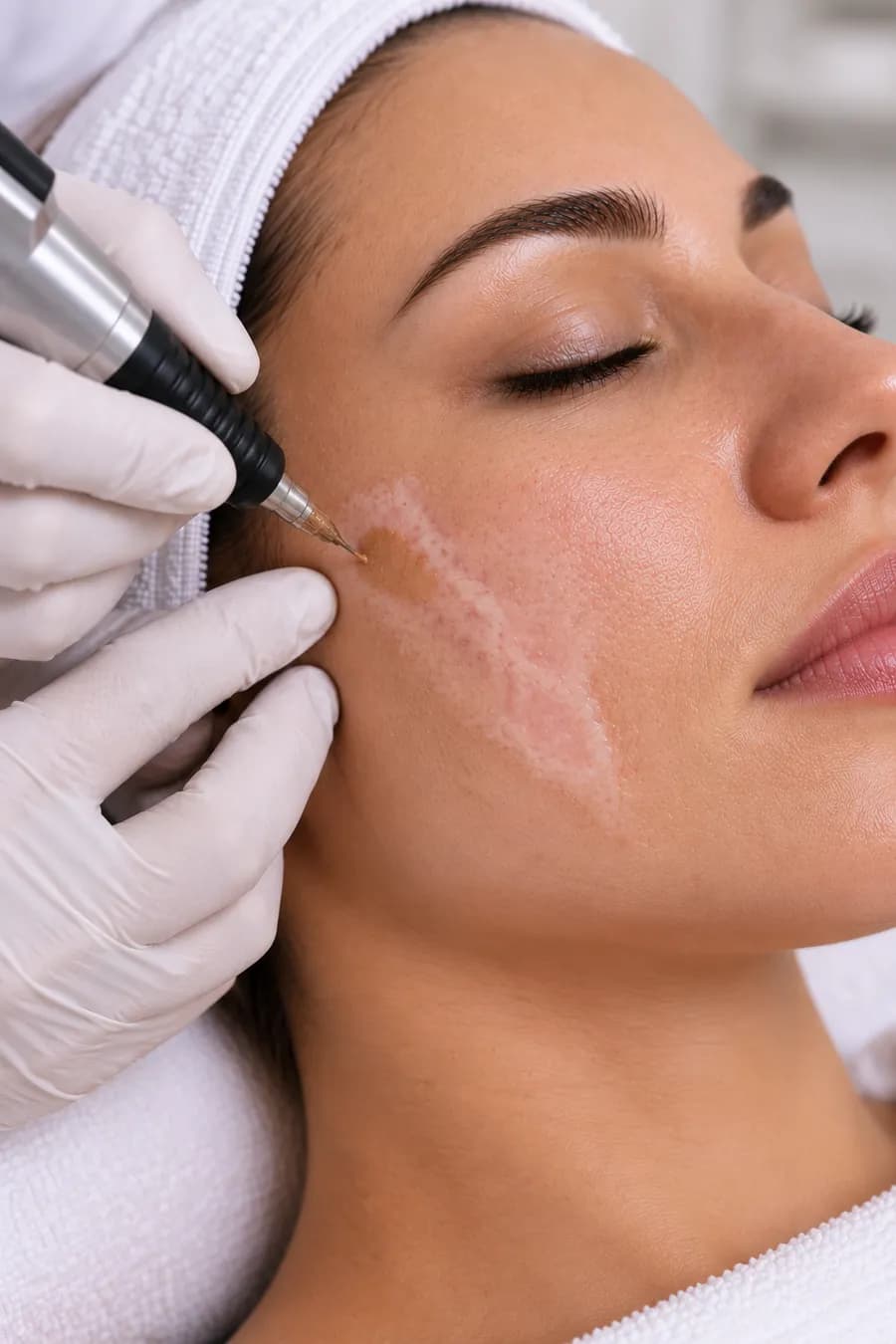
A specialised form of micropigmentation where pigment is matched to your own skin tone and worked into a scar or area of lost colour so it blends more closely with the skin around it. It is a camouflage technique rather than a treatment of the scar itself.
How it works
Colour is matched carefully against your skin, and a patch test is done first because healed colour in scar tissue can behave unpredictably. Work is then built up gradually across several sessions rather than completed in one.
Good fit for
- Fully healed, stable scars that have lost their colour
- Areas where blending matters more than texture
- Anyone who has been told a scar cannot be improved further by treatment
Suitability is assessed individually at consultation. Some treatments are not appropriate for everyone.
Your treatment journey
- A private consultation with the area assessed and photographed.
- A patch test, and a wait to see how the colour heals in that scar tissue.
- Gradual sessions building the match up.
- Review, and touch-ups as needed over time.
Results and what to expect
The aim is for a scar to be less noticeable, not invisible. Scar tissue takes pigment unpredictably, which is why a patch test comes first and why work is built slowly. Several sessions are normal and periodic touch-ups are likely as pigment softens.
Safety and common effects
Most people notice some of the following. They are temporary and expected rather than a problem:
- Redness and tenderness for a few days
- Colour appearing too strong before it settles
- Flaking over the treated area
Before you book. Suitability is assessed individually at consultation. Some treatments are not appropriate for everyone. Tell your practitioner about any medication, skin condition, allergy or recent treatment at consultation rather than on the day.
Information on this site is general and is not a substitute for medical diagnosis, advice or treatment. Speak to a healthcare professional about any health concern.
Aftercare
Keep the area clean and dry as instructed, do not pick flaking, and protect it from the sun permanently — sun exposure changes both the pigment and the surrounding skin.
Common questions
Will the scar disappear?
No. The goal is for it to blend more closely with the skin around it so it draws less attention. Texture is not changed by camouflage.
Why is a patch test essential?
Scar tissue does not take pigment the way normal skin does, and healed colour can be unpredictable. A patch test tells us how your particular scar will behave before committing to the whole area.
How many sessions?
Several, built up gradually. Rushing camouflage produces poor results, so the pace is deliberate.
Will it need redoing?
Pigment softens over time and your surrounding skin changes with sun exposure and age, so periodic touch-ups are likely.
What if my skin tone changes with the seasons?
This is a genuine consideration — the match is made to your usual tone, and it can look slightly different if you tan. It is discussed at consultation.
Is the appointment private?
Yes. This work is always done privately and at a pace you are comfortable with.
You might also consider
Ready to talk about paramedical camouflage?
Send us a message and we will help you work out whether this is the right treatment for your goals.